How to Grow a Small Salesforce Consulting Agency in 2026: 7 Proven Strategies
Want more Salesforce clients? Learn practical strategies for growing your consulting agency with partnerships, content, AI, and proven marketing tactics.
 By Kenji Sano·Reviewed by the Blue Canvas team··Updated July 15, 2026·7 min read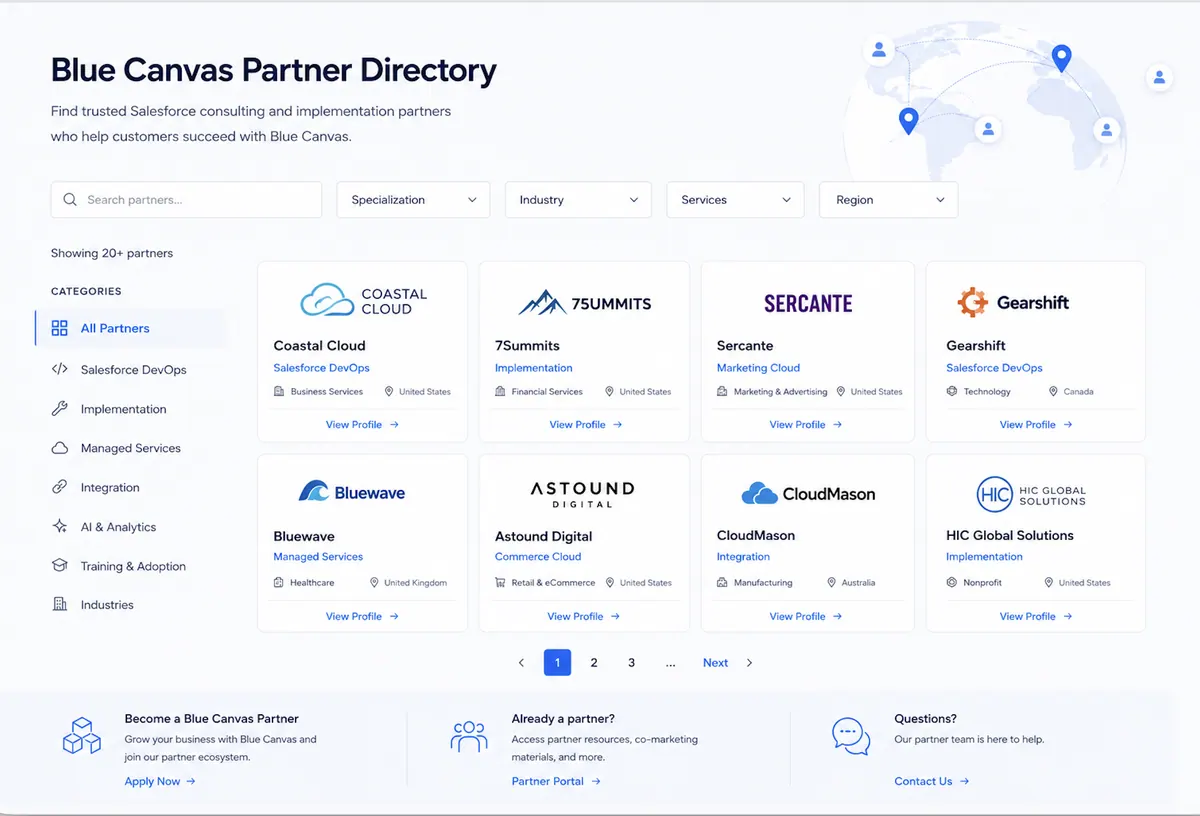
Key Takeaways
- Partner with complementary businesses to generate referral opportunities and build recurring revenue.
- Specialize in one Salesforce niche to stand out and become the go-to expert in your market.
- Package your services into fixed offerings that are easier to understand, buy, and deliver.
- Publish educational content consistently to build authority and attract inbound leads through SEO.
- Stay ahead of industry trends by creating content around new Salesforce and Agentforce developments before your competitors.
- Engage with your community by joining conversations on LinkedIn and building genuine relationships, not just selling.
- Capture email subscribers so you can stay connected with visitors who aren't ready to buy yet.
- Measure your marketing funnel and use data to improve traffic, conversions, and revenue over time.
Why Most Salesforce Agencies Stop Growing
Most agencies don't stall because the market runs out of Salesforce work. They stall because their business model runs out of room to grow. Before diving into what works, it helps to understand what quietly holds so many boutique agencies back:
- Trying to serve every industry instead of choosing a specialty
- Depending on referrals alone, with no repeatable way to generate new leads
- No recurring revenue, so growth resets back to zero every month
- Generic messaging that sounds like every other Salesforce consultancy
- Weak delivery processes that make it hard to scale beyond the founder
- No content marketing, so prospects never find them outside of word of mouth
The seven strategies below are designed to close each of these gaps, starting with the one that has generated some of our best customer relationships: partnerships.
1. Join the Blue Canvas Partner Program
Over the past few years, we’ve noticed a consistent pattern: some of our best customers were introduced to us by boutique Salesforce agencies.
These agencies weren’t trying to become software vendors. They were simply helping their clients solve a problem, and when they needed a Salesforce DevOps solution, they recommended Blue Canvas.
That inspired us to create the Blue Canvas Partner Program.
Our goal wasn’t just to reward referrals. We wanted to help smaller Salesforce agencies grow by giving them more visibility, more opportunities, and another source of recurring revenue.
As a Blue Canvas Partner, you can:
- Earn referral commissions for successful customer introductions
- Get listed in the Blue Canvas Partner Directory
- Be featured in Blue Canvas newsletters and blog articles
- Participate in joint marketing campaigns and webinars
- Access co-selling opportunities
- Increase your visibility among Salesforce administrators, developers, and architects
- Build long-term recurring revenue through strategic partnerships
We believe boutique agencies play an important role in the Salesforce ecosystem. They often provide the personalized service, deep expertise, and flexibility that larger consulting firms can’t match. Our partner program is one way we’re investing back into that community.
Action Plan
If your agency works with Salesforce customers, consider joining a partner program that complements your services. Even one or two qualified referrals each year can grow into meaningful recurring revenue while strengthening your relationship with your clients.
Learn more and apply today:
https://bluecanvas.com/partners
2. Focus on One Salesforce Specialty
Trying to serve everyone usually means becoming memorable to no one.
Instead of marketing yourself as a general Salesforce consultancy, become known for solving one specific problem.
Popular specialties include:
- Agentforce
- Education Cloud
- Manufacturing Cloud
- Revenue Cloud
- CPQ
- Salesforce DevOps
- Managed Services
- Nonprofits
- AI implementations
- Security & Compliance
- Profiles & Permissions
Specialization improves referrals, increases perceived expertise, and often allows agencies to command higher rates.
Recommended reading
Positioning: The Battle for Your Mind by Al Ries and Jack Trout.
3. Productize Your Services
Clients buy outcomes rather than hours.
Instead of selling generic consulting time, create fixed packages such as:
- Salesforce Health Check
- DevOps Readiness Assessment
- Release Management Audit
- Sandbox Strategy Workshop
- Security Review
- AI Readiness Assessment
- Technical Debt Assessment
Productized services simplify pricing, reduce friction during sales conversations, and create predictable delivery processes.
Recommended reading
Built to Sell by John Warrillow.
4. Publish Educational Content Every Week
Content marketing compounds over time.
Every article, video, webinar, or LinkedIn post becomes another opportunity for prospects to discover your agency.
Content ideas include:
- Salesforce deployment best practices
- Sandbox management
- Salesforce DevOps tutorials
- Flow best practices
- Metadata deployment guides
- Release management checklists
- Salesforce AI use cases
- Common Salesforce mistakes
Consistently answering customer questions builds authority while improving organic search rankings.
Recommended reading
They Ask, You Answer by Marcus Sheridan.
5. Intercept Trends Before Your Competitors Do
Once you’ve chosen your niche, don’t just create content. Create content around the conversations your ideal customers are already having.
For example, if your agency specializes in Agentforce, your prospects are probably searching for topics like:
- Agentforce release announcements
- New Salesforce AI features
- AI governance
- MCP servers
- Salesforce acquisitions
- Pricing changes
- Security updates
- Dreamforce announcements
The earlier you publish, the more likely you are to rank on Google, appear in AI search results, and get shared on LinkedIn.
Where to Find Trending Topics
- Google Trends to identify rising search interest and compare topics over time. (Google for Developers)
- X (formerly Twitter) to monitor what the Salesforce community is discussing in real time through the Explore and Trends sections. (Help Center)
- Salesforce release notes and product announcements
- Dreamforce keynote announcements
- LinkedIn posts from Salesforce MVPs
- Reddit communities like r/salesforce
- Competitor blogs and newsletters
Don’t just report the news. Add your own perspective, explain what it means for customers, and include practical examples.
Action Plan
Set aside 30 minutes every Monday to review Google Trends, X, and Salesforce news. Make a list of three trending topics, then publish your take on the most relevant one before the end of the week. Consistently being early is one of the fastest ways to establish authority in your niche.
6. Join the Conversation in Your Niche
Growing your agency isn’t just about publishing content. It’s also about participating in the conversations that are already happening.
Search LinkedIn for topics related to your niche, whether that’s Agentforce, Salesforce DevOps, Education Cloud, or another area of expertise. Follow the consultants, customers, MVPs, and companies leading those discussions.
Instead of immediately promoting your services, engage with their content in a meaningful way.
- Share your perspective on their posts.
- Ask thoughtful questions.
- Congratulate people on product launches or milestones.
- Share useful resources when they’re relevant.
- Celebrate others’ successes.
- Be curious and open to learning.
The goal isn’t to make a sale. It’s to build genuine relationships with people who share your interests. Over time, those conversations increase your visibility, expand your network, and often lead to referrals, partnerships, and new opportunities.
People are much more likely to remember someone who consistently contributes thoughtful insights than someone who only appears to pitch their services.
Action Plan
Spend 15 to 20 minutes each day engaging with your niche on LinkedIn. Leave thoughtful comments on at least three posts, connect with one new person each week, and focus on adding value rather than promoting your business. Consistency will do far more for your reputation than occasional outreach campaigns.
7. Add an Email Capture to Your Website
Not every visitor is ready to request a quote, schedule a demo, or start a project today.
Some visitors are simply researching, comparing options, or waiting for the right time. If they leave your website without a way to stay in touch, you may never get another chance to reach them.
Instead of asking every visitor to “Contact Sales,” offer a simple way to subscribe to updates. Invite them to receive product updates, Salesforce news, industry insights, or practical tips related to your niche.
This gives interested prospects a low-commitment way to hear from you without feeling pressured to buy.
The key is to provide value, not promotions. Share useful content, announce new services, highlight Salesforce or Agentforce updates, and occasionally showcase customer success stories. Avoid sending emails just for the sake of sending them.
An email list is one of the few marketing assets you truly own. Unlike social media platforms or search rankings, you control how and when you communicate with your audience. As your list grows, so does your ability to nurture relationships and stay top of mind until prospects are ready to engage.
Action Plan
Add an email signup form to your homepage, blog, and resource pages with a simple message like, “Stay up to date with the latest Salesforce and Agentforce insights. No spam, unsubscribe anytime.” Then commit to sending one thoughtful email each month that educates, informs, or helps your audience solve a real problem.
Bonus: Track Everything
You can’t improve what you don’t measure.
As your agency grows, it’s easy to rely on intuition. Instead, build the habit of tracking your marketing and sales funnel so you always know what’s working and where prospects are dropping off.
At a minimum, track:
- Website visitors
- Traffic sources (organic search, LinkedIn, referrals, partner programs, email, paid ads)
- Email subscribers
- Marketing Qualified Leads (MQLs)
- Sales Qualified Leads (SQLs)
- Demo requests
- Proposals sent
- Closed deals
- Customer retention and referrals
Don’t stop at the numbers. Understand where your best customers are coming from. You may discover that LinkedIn comments generate better leads than paid ads, or that a partner program produces a higher conversion rate than cold outreach.
Review your funnel every week or month and look for trends. If traffic is increasing but demo requests aren’t, your messaging may need improvement. If proposals are increasing but deals aren’t closing, your pricing or positioning may need attention.
The most successful agency owners don’t guess. They measure, learn, and improve.
Action Plan
Create a simple dashboard or spreadsheet that you update every month. Track each stage of your funnel, compare it to previous months, and ask one question: “What can we improve by 10% next month?” Over time, those small improvements compound into significant growth.
Numbers tell a story. Make reporting a habit, and let data guide your decisions instead of assumptions.